All Yono Store: APK Guide: Files, Versions and Android Installation
For Android readers in India: identify the All Yono Store package, compare its app…


Last updated: 20 October 2026
Write down your installed Rummy Ludo version before comparing a replacement package. Then read the description of what changed. An update enquiry needs a consistent product identity and starting build, not merely two different version numbers.
Choose the detail you want to understand before opening another file or screen. Descriptions of play, release records and account instructions concern different subjects. Following the relevant one gives a broad search a clearer direction.
For Indian Android readers, this guide connects existing product records with the tasks they explain. Its purpose is to make the release information readable in context rather than leave isolated labels to interpret.
The focus is on release records: identify the copy installed, compare corresponding version details and examine the actual explanation provided for a build.
First distinguish the game itself, its Android package and an account feature. A product review provides an overview, an APK guide explains the installer and a login guide concerns an existing account. Each answers a separate kind of enquiry.
Inspect the destination’s publisher and other product details alongside its name. Similar graphics or wording do not establish who publishes an app. Where records conflict, pause the download and compare them instead of selecting the first result.
The build number identifies a release; its description explains the work behind it. Consult that description to determine whether the change affects the interface, compatibility, a feature or a correction.
Use the installed version as your starting record and check that the proposed package updates the same application. A similarly named product could be different. Inspect releases individually when several are listed: chronological order does not mean every file should be installed.
Treat the compact directory’s fields separately. The product name identifies the subject, its version indicates a build and the size records a file or installation. No single field supplies a complete account of the service.
Choose the details relevant to your device and intended use. Compare matching apps, releases and file types. Different values call for closer inspection, not an automatic preference for the larger one.
Keep three records distinct: the handset’s Android release, the downloaded package and the application already installed. Instructions concerning one may not describe the others. Writing each down prevents confusion during a Rummy Ludo check.
Organise downloaded files so completed packages are distinguishable from transfers still running. Check whether instructions concern a new installation or an update, especially when an older copy is already on a phone used for several apps.
Identify the failure stage before making changes. A transfer still in progress, an Android installer error, a failed launch and a notice on an account screen require different investigations.
Log a check and its outcome before trying another. A network switch, finished transfer and replacement release are separate changes; doing them together hides which affected the result. If you need assistance, give a short reproduction with relevant device and version details.
Describe the minimum steps that reproduce an unanswered problem. Provide the app title, build, Android release and exact message, then explain how the result differs from what you expected.
Separate unrelated issues even when they happen during one visit. A broken link, unsuccessful transfer and account error need their own descriptions. This helps the recipient answer the right question.
Return to the purpose of your visit. An overview should show what merits further reading; installation research should keep file and release records together. For access trouble, follow the account guide rather than downloading the application again.
Make the next check concrete enough to describe in a sentence. If its purpose is still unclear, read the relevant explanation before proceeding. This makes subsequent comparisons and requests for help easier to follow.
When the installed copy works and no verified need to replace it has been identified, examine the proposed changes first. This deserves particular attention for APKs from third-party sources rather than a conventional app marketplace.
Your needs and the verification of the proposed release determine whether retaining the older build makes sense. With a working installation and no documented improvement relevant to you, an immediate update may offer little reason for urgency.
A verified replacement may be worth installing if it resolves compatibility or functionality issues that you experience.
Before proceeding, inspect the source, publisher, build, permissions, privacy disclosures and security assertions. Encryption, RNG tests, certificates and independent audits need identifiable supporting evidence; promotional wording alone does not establish them.
Changes to an application can affect how menus, account settings, or payment options are displayed. Before making a transaction, make sure you understand what you are agreeing to and confirm that real-money participation is legally permitted where you are located.
An update also does not change the basic principle of responsible gaming. Bonuses and previous winnings should not be treated as guaranteed future returns, and users should avoid chasing losses.
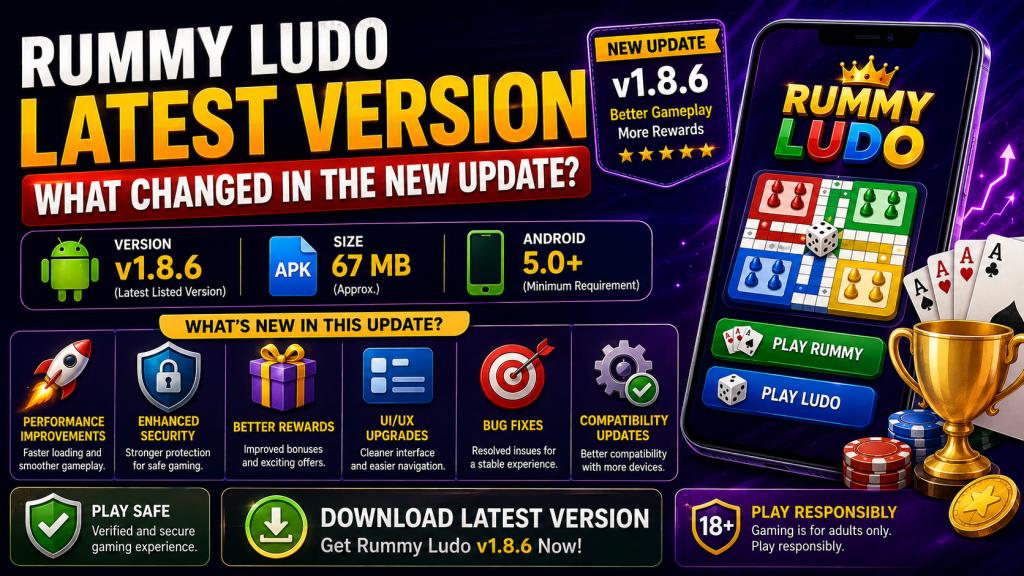
A third-party Rummy Ludo directory currently lists v1.8.6. Because APK listings can change, verify the version against the exact source and package before treating it as the current release.
The same third-party listing gives an approximate file size of 67 MB. File sizes can change between releases, so use the figure as a comparison rather than a permanent specification.
The listing currently specifies Android 5.0+. Check the requirements for the specific version you intend to install.
An immediate update is not always necessary. Establish that the package is actually a later release, review the information supplied about it and check compatibility with your handset.
An unfinished transfer, limited storage, incompatible Android release, conflict with an installed app, security restriction or invalid package can each prevent installation.
Choose an identifiable source and compare its publisher, build, file details and device requirements before downloading. Words such as “latest” and “official” are insufficient on their own.
A release number does not prove safety. Before installation or use, assess the origin, publisher, requested permissions, privacy disclosures, security assertions and account or payment conditions.
 Apk Download Guide
For Android readers in India: identify the All Yono Store package, compare its app…
 Apk Download Guide
Separate a Love Rummy Yono search phrase from the actual app record, with guidance…
 Apk Download Guide
Investigate the Gogo Rummy Android package: identify the build, compare release records and distinguish…