66 Rummy on Android: Games and Getting Started
Use this 66 Rummy overview to connect game formats, Android records and account questions…


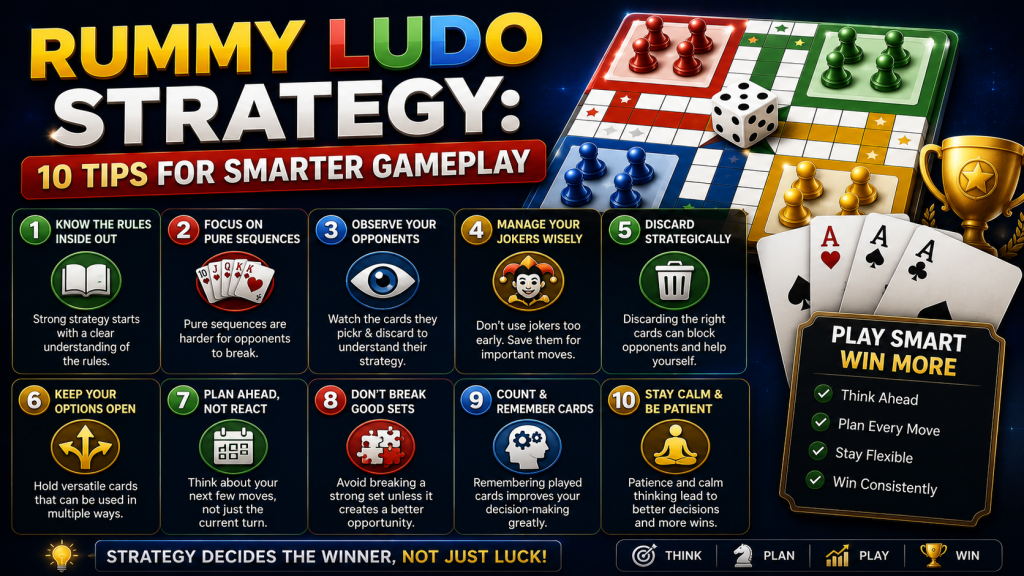
Last updated: 20 October 2026
Begin a Rummy Ludo strategy review with the objective of the current format and the choices available on that turn. A brief practice record should explain why you acted. Advice for another game does not necessarily apply just because its app has a similar name.
Before opening a related file or screen, decide what you need to learn. Game descriptions address play, release entries describe software and account instructions concern access or account functions. Separating these subjects gives a broad search a useful direction.
For Android readers in India, the aim is to connect explanations with the product details they concern. Follow the subject through the article instead of treating its labels as disconnected pieces of advice.
Learning here means examining decisions that can be identified and explained. Organised examples and notes help with that review; they do not supersede the game’s rules or existing qualifications.
A Rummy Ludo search may lead to the title itself, an Android listing or an account-feature guide. Determine which you need. Product reviews, installation-file advice and instructions for an existing account answer different questions and should be read accordingly.
Compare the name and details on the destination page. A familiar word or similar picture does not identify the publisher. If records disagree, pause a download and investigate the discrepancy rather than accepting the first result.
Give a practice session one manageable aim. You might study a possible combination, the order of turns or the meaning of an action label. A specific focus makes later review more informative than trying to improve everything simultaneously.
After playing, choose a decision from the session and describe the other options. Check that explanation against the rules of the relevant format. This turns a broad strategic idea into a concrete action you can examine.
Treat the lobby as a directory of games. For the format you want to learn, open its description and read both the objective and turn order. Matching artwork does not show that two games use the same rules.
Learn the current format’s action labels and how a round ends before applying advice from elsewhere. A short list of these terms provides a sounder starting point than transferring another game’s instructions because it appears in the same app.
Separate hand structure from turn choices. First establish the combinations the format accepts, then ask what you can do at that moment. This distinction connects the cards held with drawing, discarding and declaring.
Keep each worked example attached to its format. General rummy terminology can introduce an idea, but the game’s own instructions establish its context. Clarify an uncertain combination before judging a subsequent move based on it.
Use the overview to distinguish the browsing sections, account route and individual game screens. Identify their labels and visit the one relevant to your question. You can leave unrelated menus for another session.
Note where information is displayed. A lobby message may apply to one table or format, while an account notice could have wider scope. Recording the location helps prevent screen-specific wording from being read as an application-wide rule and makes support questions clearer.
Keep the phone you use in view while following the guide. Indian handsets may show different menus, English labels and network conditions from those in screenshots. Record your actual labels and consult the Rummy Ludo details that match your task.
Check the explanation around a term before acting on it. A short result may blur the distinction between a game format, app title and menu item. Identifying the subject first can save a lengthy investigation of the wrong issue.
When asking for help, set out the starting situation, action and observed outcome in that order. Supply device and app versions where relevant. Exact error text is more useful than a broad paraphrase of what went wrong.
Include the screen or article you followed, so the reader has context without reconstructing your browsing. When reporting a page error, point to the passage and explain its apparent conflict with the current app record.
Complete the issue concerning your device, application or game before pursuing another topic through related reading. You do not need to attempt every task in a single visit for the page to be useful.
Record questions that remain unanswered. Missing information calls for clarification, not an invented answer. A precise enquiry usually makes the next investigation clearer than repeated visits to unrelated pages.
Look across the hand rather than judging cards one at a time. Choose whether to examine connections, preserve an alternative plan or consider the position a move leaves on the following turn.
When fresh information appears, reconsider the plan. Explain both why a card is worth retaining and why a possible combination might be abandoned. Put those reasons in the practice notes instead of labelling a move simply good or bad.
Judge the explanation separately from the result. Revisit the information available, permitted actions and alternatives considered. The next session can then address a defined learning question, instead of chasing an outcome whose causes remain unclear.
No move ensures success in every round. The position can change with the opening hand, possible combinations, cards that appear later and choices made by opponents.
These changing circumstances explain why Rummy Ludo strategy cannot consist of supposedly certain moves.
The useful part of Rummy Ludo strategy is learning to assess available information, rather than searching for a hidden action that ensures victory.
For a beginner, start with the rules and assess the entire hand. Retain worthwhile alternatives, watch the round and avoid hasty moves. No single approach fits every position.
Build one habit before adding another: consider important actions in advance, revisit the hand as it changes, watch the round and review the choices afterwards.
Yes. Knowing how the game works provides the basis for judging a choice; strategic ideas become easier to use once those mechanics are familiar.
No. Advice may make your reasoning more deliberate, but an individual result can still depend on the cards, opponents and circumstances.
No. Adapt to the hand and information emerging during play. Repeating an unchanged plan will not necessarily suit the next position.
Reassess the position now available instead of letting a mistake dictate the rest of the round. Identify the remaining choices and revise your plan around them.
After the rules, develop how you choose actions, manage cards and observe play. Flexibility and a review of past decisions are part of that next stage.
 App Review
Use this 66 Rummy overview to connect game formats, Android records and account questions…
 App Review
Investigate Gogo Rummy’s app record, Android installation and account access, with checks on bonus…
 App Review
Distinguish the All Yono Store directory, app and game records, then check Android details,…