66 Rummy on Android: Games and Getting Started
Use this 66 Rummy overview to connect game formats, Android records and account questions…


Last updated: 20 October 2026
Do not infer every lobby game’s rules from the combined Rummy Ludo name. Identify the selected format first. Before comparing examples, read what it aims to achieve, which actions it permits and how it defines a finished round.
A product overview, Android package information and help with a returning user’s account are different answers to a search for Rummy Ludo. Decide which answer you need before following a list of instructions.
The following sections group the existing details by task. Keep the relevant application record with you as you read, and use another guide when your enquiry moves to a different subject.
This article concerns the game format displayed inside the app. Broad terminology, specific rules and controls on a particular screen each have their own context; keep those distinctions while reading.
Clarify whether you are assessing play, looking for an Android package or reopening an account. The task determines what deserves attention now and what can wait. A useful game guide should answer that question rather than automatically lead everyone through installation.
Check the title together with the listing, publisher and release entry. If two records appear to refer to separate products, return to the intended one instead of combining instructions from both.
Open the description for the actual table or game selected. An app title may cover several formats. Learn the objective, possible actions and round-ending conditions before trying to interpret each on-screen control.
Refer to that format’s own instructions while studying individual examples. Explain what a turn was meant to accomplish and how the action changed the position. Do not turn a table-specific requirement into general guidance for every game.
First locate the lobby or home page, account section and help area. This basic map of Rummy Ludo places unfamiliar labels in context before you try to use them.
For the game selection, stay with the lobby and game descriptions. For an existing account, follow its account route. Keeping the tasks separate makes the connection between each action and its outcome easier to remember.
Decide what you want to compare: formats, interface clarity, Android release details or relevant help. Judge each entry against the same criteria so the comparison answers a defined question.
Note the source of each detail and distinguish it from an assumption. A listing’s feature description and an actual in-app notice provide different evidence. A traceable comparison gives more information than a ranking based on the most conspicuous promotion.
Ask what card arrangements the format recognises before asking which action is available now. Keeping these questions distinct clarifies how a hand relates to drawing, discarding and declaring.
Use examples within their stated format. General explanations introduce card-game terms; the current game’s instructions supply the precise setting. Resolve uncertainty about a combination before evaluating a move that depends on it.
On an Indian Android handset, keep the instructions beside a note of the phone, installed release and task stage. That context makes the guide practical without requiring every possible procedure.
Read the complete instruction first. If your display uses different labels, identify the intended task instead of selecting a button merely because its position matches. Notes on completed checks help you resume or explain the enquiry later.
For a question that remains unresolved, give the shortest sequence producing the result. Include the app and version, Android release and exact message. Describe both what you anticipated and what appeared.
Separate unrelated faults in your notes. A broken link, failed transfer and account-screen problem remain different issues even if they happened in the same visit. Distinct descriptions make a relevant reply more likely.
Follow the part concerning your app, device or game until it answers your immediate question. Other topics can wait for the related articles; completing every task during one visit is unnecessary.
Treat missing details as questions to clarify. Record them without guessing. A focused enquiry helps the next investigation more than repeatedly switching between pages on unrelated subjects.
Use the game selected in the interface as the starting point. Its objective and permitted moves must be identified separately from the broader app name. Keep that rule description alongside your example instead of importing a move from a different game.
In the card examples, assess relationships between cards. One might extend a sequence, fit another accepted combination or remain unconnected. Consider both the action available now and the arrangement that the move would leave.
Trace a turn through its order, available choices and the condition ending the round. Before depending on a tactic, make sure you can explain why the required arrangement is valid. This connects beginner practice to the objective rather than isolated actions.
After working through an example, identify the known information, legal options and reason for the chosen move within that format. This review can expose a misunderstood rule; an unfavourable outcome alone does not show that the rules changed.
That understanding makes learning Rummy Ludo strategy more useful: explain the decision rather than memorising moves presented as certain to succeed.
Consult the instructions for the particular platform and version, because exact rules can differ. A beginner’s starting points are the objective, sequence of a turn, accepted combinations and the conditions that finish a round.
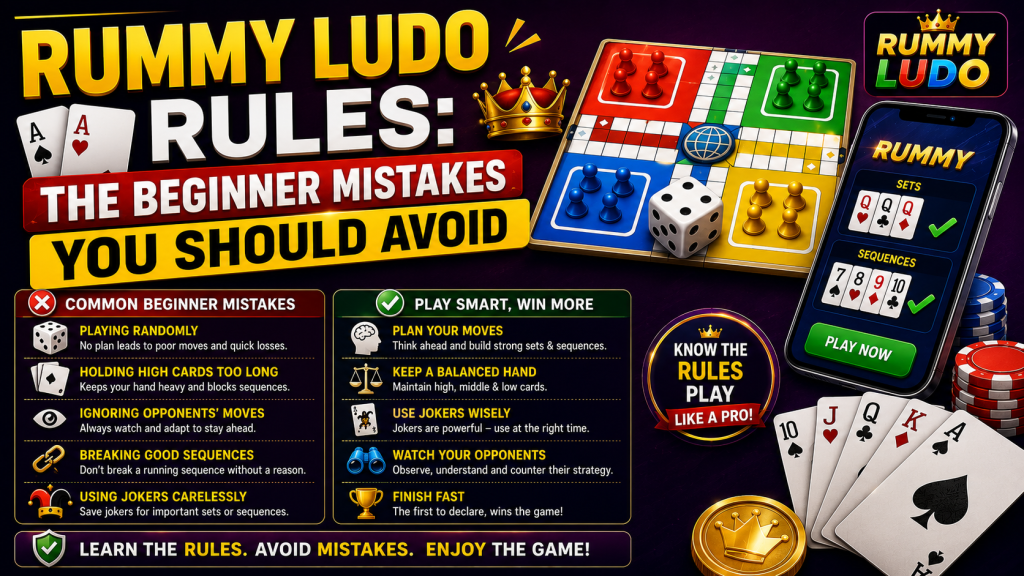
New players often act before considering the resulting position. Another mistake is concentrating only on their own hand while missing information elsewhere in the game.
Learn the rules well, then practise planning ahead, revisiting the hand and watching other players. Avoid committing to one combination without a need to do so.
Yes. Familiarity with the basic mechanics makes strategy more understandable. Once the available actions are known, you can examine the circumstances and reasons for choosing each.
Take time with decisions, reassess the hand and observe opponents. Keep doubtful cards only for an identifiable reason, and adjust when the position changes.
Playing provides experience, but repetition alone can repeat errors. Pair practice with knowledge of the rules and a review of your choices after every round.
 App Review
Use this 66 Rummy overview to connect game formats, Android records and account questions…
 App Review
Investigate Gogo Rummy’s app record, Android installation and account access, with checks on bonus…
 App Review
Distinguish the All Yono Store directory, app and game records, then check Android details,…